Quality Healthcare Solutions Across Global Markets

Blog

Your blog category

Blog

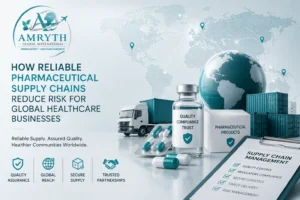
How Reliable Pharmaceutical Supply Chains Reduce Risk for Global Healthcare Businesses

Home Blogs Pharmaceutical Supply Chain Global Pharmaceutical Supply How Reliable Pharmaceutical Supply Chains Reduce Risk for Global Healthcare Businesses Pharmaceutical supply reliability depends on much more than moving products from one country to another. Sourcing, documentation, packaging, logistics, communication and continuity all work together to reduce disruption and help healthcare businesses maintain dependable access to essential products. August 2026 10–12 min read Pharmaceutical Supply Chain Reliable Supply • Quality Focus • Documentation • Logistics Coordination Dependable Product Sourcing Documentation Coordination Cross-Border Logistics Supply Continuity On This Page Supply Chain Guide Why Supply Reliability Matters Where Supply Chain Risk Appears Reliable Sourcing Documentation Alignment Availability & Lead Times Packaging & Handling Logistics Coordination Communication Continuity Planning Buyer Checklist FAQs Supply Enquiry Looking for dependable pharmaceutical export coordination? Contact Our Team Introduction Supply Reliability Is a Business-Critical Part of Global Healthcare Healthcare businesses depend on consistent access to pharmaceutical products, medical consumables, devices and related supplies. When a supply chain is unreliable, the impact can extend far beyond a delayed shipment. Disruptions can affect procurement schedules, inventory planning, customer commitments, healthcare operations and the ability to maintain continuity across local distribution networks. For international buyers, this means evaluating a pharmaceutical export partner not only by price or product availability, but by how well the supplier coordinates sourcing, documentation, packaging, logistics and communication throughout the transaction. Key Principle A reliable pharmaceutical supply chain reduces avoidable uncertainty by improving visibility, coordination and consistency at every stage of the order. 01 Why Pharmaceutical Supply Chain Reliability Matters Pharmaceutical procurement is different from ordinary product sourcing because healthcare buyers often operate within strict timelines, controlled product requirements and destination-specific documentation processes. Healthcare Continuity Reliable supply helps healthcare businesses maintain planned product availability. Procurement Planning Clear lead times support better ordering and inventory decisions. Compliance Coordination Documentation can be aligned before dispatch instead of being corrected later. Buyer Confidence Predictable communication and coordination build stronger long-term partnerships. 02 Where Risk Can Enter a Pharmaceutical Supply Chain Risk can appear at multiple points between the initial enquiry and final delivery. Understanding these points helps buyers ask better questions before confirming an order. 01 Product Availability Products may be unavailable, delayed in production or available only in limited quantities. 02 Manufacturer Coordination Changes in source, specifications or production schedules can affect the order. 03 Documentation Gaps Missing or inconsistent records can create delays during export or import processing. 04 Packaging Problems Incorrect packing or labelling can create operational or compliance difficulties. 05 Logistics Disruption Transport schedules, customs processing and route changes can affect delivery timelines. 06 Poor Communication Delayed updates can prevent buyers from responding effectively when conditions change. 03 Reliable Sourcing Reduces the Risk of Product Disruption A dependable supply chain begins with dependable sourcing. International buyers should understand how an exporter identifies products, works with manufacturers and confirms specifications before committing to delivery. Confirm the exact manufacturer and product specification Verify pack size, strength and dosage form Confirm current product availability Review batch and shelf-life expectations Understand production or procurement lead times Clarify what happens if the preferred source becomes unavailable Reliable sourcing is not simply about finding a product once. It is about creating a repeatable process that can support future requirements with fewer surprises. 04 Documentation Alignment Prevents Avoidable Delays Documentation is closely connected to supply-chain reliability. A shipment can be physically ready but still delayed if commercial, product or regulatory documents are incomplete or inconsistent. Commercial Documents Invoice, packing list and agreed transaction details should match the shipment. Product & Quality Records Batch, manufacturer, shelf-life and quality documentation should be reviewed where required. Destination Requirements Buyer-side regulatory and import expectations should be confirmed before dispatch. Transport Documents Shipping records should align with the actual goods and agreed logistics arrangement. 05 Availability, Inventory and Lead-Time Visibility Matter Unclear lead times are a major source of procurement uncertainty. Buyers should distinguish between products that are immediately available and products that require manufacturing or additional sourcing. Current Availability Confirm whether the requested quantity is available at the time of quotation. Production Lead Time Understand how long manufacturing or replenishment may take if stock is unavailable. Order Preparation Allow time for documentation, packing, inspection or buyer-specific requirements. Transit Planning Shipping time should be considered separately from product preparation time. Clear lead-time communication allows healthcare businesses to make more informed inventory and procurement decisions. 06 Packaging and Handling Protect Product Integrity Pharmaceutical products may travel through warehouses, transport hubs, customs facilities and local distribution networks. Packaging should therefore be appropriate for the product and the planned transportation method. Primary Packaging Secondary Packaging Export Cartons Batch Labelling Expiry Information Storage Instructions Fragile Handling Temperature Requirements Where products require specific storage or temperature conditions, these requirements should be identified before the logistics plan is finalized. 07 Logistics Coordination Reduces Cross-Border Uncertainty International pharmaceutical logistics can involve freight booking, export clearance, transport documentation, customs procedures and coordination with destination-side partners. 01Order Ready 02Document Check 03Freight Coordination 04Export Dispatch 05Destination Handling The objective is not to eliminate every external disruption, which is impossible, but to improve visibility and coordination so that problems can be identified and communicated early. 08 Communication Is One of the Strongest Risk-Control Tools Buyers often focus on physical logistics, but communication quality can have just as much influence on supply-chain reliability. Clear confirmation of product specifications Realistic lead-time updates Early warning of supply changes Written documentation of key commitments Prompt clarification of document requirements Shipment status visibility Good communication helps buyers adjust plans when conditions change instead of discovering problems after deadlines have already been missed. 09 Long-Term Supply Continuity Requires Planning Healthcare businesses with recurring requirements should evaluate whether a supplier can support more than a one-time transaction. Long-term continuity depends on repeatable sourcing, manufacturer relationships and early planning for future demand. Demand Visibility Sharing expected future requirements can support better sourcing preparation. Manufacturer Coordination Long-term relationships can improve visibility around product availability. Repeat Procurement Consistent specifications and documentation can make recurring orders more efficient. Contingency Thinking

Blog

Pharmaceutical Export Documentation & Compliance: A Practical Guide for Global Buyers

Home Blogs Export Documentation & Compliance Pharmaceutical Export Guide Pharmaceutical Export Documentation & Compliance: A Practical Guide for Global Buyers International pharmaceutical trade depends on much more than product availability. Accurate documentation, destination-market requirements, product traceability and coordinated export processes can determine whether a shipment moves smoothly or faces avoidable delays. August 2026 11–13 min read Export Documentation Documentation • Compliance • Traceability • Export Coordination Commercial & Shipping Documents Product & Batch Documentation Destination Compliance Packaging & Logistics Alignment On This Page Documentation Guide Why Documentation Matters Commercial Documents Product Documentation Quality Documents Regulatory Documents Destination Requirements Labelling & Packaging Shipping Documents Batch Traceability Buyer Checklist Common Errors FAQs Export Requirement Need help coordinating your pharmaceutical export enquiry? Contact Our Team Introduction Documentation Is a Core Part of Pharmaceutical Export Reliability Pharmaceutical exports operate within a highly documentation-dependent environment. Products can move across manufacturers, exporters, freight partners, customs authorities, distributors and healthcare businesses before reaching their final market. At each stage, documents help identify the product, shipment, commercial terms, manufacturing details and compliance status. Incomplete or inconsistent paperwork can create customs delays, requests for clarification, regulatory concerns or difficulties for the importer. For global buyers, the most effective approach is to define documentation expectations before confirming an order. The exact requirements vary by product type, destination country and applicable local regulations. Important There is no universal pharmaceutical export document pack that works for every market. Buyers should confirm destination-specific requirements with their regulatory, customs or compliance advisors before shipment. 01 Why Pharmaceutical Export Documentation Matters Documentation supports multiple functions throughout the export process. It allows the buyer, exporter, logistics providers and authorities to understand exactly what is being shipped and under what commercial and regulatory conditions. Product Identification Confirms the product, strength, pack size, batch and related details. Regulatory Review Supports destination-market review where documentation is required. Shipment Verification Helps match physical goods with invoices, packing information and transport records. Traceability Supports identification of batches, manufacturers and expiry information. 02 Commercial Documents Buyers Should Review Commercial documents define the transaction between buyer and exporter. The details on these documents should be consistent with the purchase order, shipment and agreed terms. 01 Commercial Invoice Usually records seller, buyer, products, quantities, values, currency and other commercial information. 02 Packing List Describes how the shipment is packed, including cartons, quantities, weights or package-level details where relevant. 03 Purchase Order Acts as an important reference for product specifications, quantities, pricing and agreed requirements. 04 Commercial Terms Shipping responsibility, payment terms and agreed Incoterms should be clear before dispatch. 03 Product-Specific Documentation Pharmaceutical buyers often need product information beyond the commercial invoice. Product-level documentation helps confirm exactly what is being supplied. Product name and composition Strength and dosage form Pack size and presentation Manufacturer information Batch or lot details Manufacturing and expiry dates Storage requirements Product specifications where applicable Product documentation should match the physical goods and other shipment records. Differences in product description, strength, manufacturer name or pack size can create unnecessary clarification during import processing. 04 Quality-Related Documents Quality documentation requirements vary according to the product and destination market. Buyers should define what documents are required before the exporter confirms availability. Certificate of Analysis May provide batch-specific test or quality information for the product. Manufacturer Credentials Relevant manufacturer licences or certificates may be requested depending on the transaction. Specification Documents Can help buyers confirm agreed product attributes where applicable. Packaging Details Supports review of labelling, pack presentation and shipping configuration. 05 Regulatory Documents: What Buyers Should Clarify Pharmaceutical regulatory documentation is destination-specific. Some markets may require product registration, manufacturer documentation, import permits or certificates that are not required elsewhere. Product Registration Confirm whether the product must be registered before it can be imported or distributed. Manufacturer Approval Some jurisdictions may require approved or registered manufacturing sources. Import Authorisation The importer may need specific licences, permits or approvals before shipment. Supporting Certificates Additional regulatory or manufacturer certificates may be requested depending on product and market. Validity & Authentication Where required, confirm expiry, legalisation, notarisation or authentication expectations before dispatch. 06 Destination-Market Requirements Must Be Confirmed Before Shipment One of the most common mistakes in cross-border pharmaceutical trade is assuming that documentation accepted in one market will automatically be accepted in another. 01 Destination Country Identify the final importing jurisdiction. 02 Buyer Type Distributor, institution, healthcare provider or another authorised importer. 03 Product Category Medicines, medical devices and consumables may follow different requirements. 04 Required Documents Confirm requirements with the appropriate destination-side professionals. 07 Labelling and Packaging Compliance Documentation and physical packaging must align. Buyers should confirm any destination-specific labelling requirements before production, procurement or shipment preparation. Product Name Strength Batch Number Manufacturing Date Expiry Date Storage Instructions Manufacturer Details Language Requirements Country-Specific Labelling Export cartons should also be suitable for international handling and clearly aligned with the shipment packing list where applicable. 08 Shipping and Logistics Documentation Once the order is ready for dispatch, logistics documentation must match the commercial and product information already agreed between buyer and exporter. Bill of Lading / Transport Document Depends on the selected mode of transport. Air Waybill Commonly used for air freight shipments. Certificate of Origin May be required depending on destination or trade requirements. Insurance Documentation Relevant where insurance is part of the agreed shipping arrangement. The exact set of shipping documents depends on shipment terms, transportation mode and destination requirements. 09 Batch Traceability and Record Consistency Traceability is especially important in healthcare supply. Product and shipment records should consistently identify the relevant batch or lot wherever required. 01Manufacturer 02Batch Details 03Quality Documents 04Invoice & Packing 05Shipment Buyers should review key documents for consistency in product description, batch information, dates, manufacturer details and quantities before shipment. Global Buyer Checklist What to Confirm Before Approving a Pharmaceutical Shipment Commercial invoice details are correct Packing list matches shipment configuration Product name, strength and pack size are correct Manufacturer details are consistent Batch and expiry information is verified Required quality documents are available Destination regulatory requirements are

Blog

What International Buyers Should Check Before Choosing a Pharmaceutical Exporter in India

Home Blogs Pharmaceutical Export Global Pharmaceutical Buyer Guide What International Buyers Should Check Before Choosing a Pharmaceutical Exporter in India A practical guide for international distributors, healthcare businesses and institutional buyers evaluating pharmaceutical exporters in India for quality, documentation, sourcing reliability, packaging, logistics and long-term supply coordination. August 2026 10–12 min read Pharmaceutical Export Quality • Compliance • Documentation • Reliability Verify Business Credentials Review Quality Documentation Check Packaging & Shelf Life Evaluate Supply Reliability On This Page Buyer Checklist 1. Business Credentials 2. Product Sourcing 3. Quality Documentation 4. Export Documentation 5. Destination Requirements 6. Product Portfolio 7. Shelf Life 8. Packaging Standards 9. Storage & Transport 10. Supply Reliability 11. Communication 12. Price vs Reliability 13. Commercial Terms 14. Structured Enquiry Buyer Checklist FAQs Discuss Your Requirement Looking for a dependable pharmaceutical export partner? Send Enquiry Introduction Choosing the Right Export Partner Requires More Than Comparing Prices India is an important sourcing destination for pharmaceutical products, generic medicines, healthcare supplies, medical consumables and related products. For international distributors, healthcare businesses and institutional buyers, this creates significant sourcing opportunities. However, choosing a pharmaceutical exporter should involve much more than comparing product lists or quotations. Healthcare products require dependable sourcing, accurate documentation, appropriate handling and clear communication throughout the export process. A supplier that appears suitable at the enquiry stage can still create serious operational problems later if documentation, product specifications, packaging or logistics are not properly coordinated. International buyers should therefore evaluate a pharmaceutical export partner from several perspectives before placing an order. Key Principle The lowest quotation is not always the lowest-risk option. Quality, documentation, communication and supply continuity should be evaluated together. 01 Verify the Exporter’s Business Credentials The first step is confirming that you are dealing with a genuine and professionally operated business. Before beginning a commercial relationship, buyers should request and verify relevant company information. Company registration information GST details Import Export Code (IEC) Applicable pharmaceutical or business licences Registered business address Official company email and contact information Banking details in the registered company name Relevant manufacturer or supplier documentation The exact documents required can vary depending on the product category and destination market. A professional exporter should be comfortable providing appropriate company information during the buyer verification process. 02 Understand Where the Products Are Sourced From Knowing the exporter is only part of the process. International buyers should also understand the source of the pharmaceutical products being supplied. Who manufactures the product? Is the manufacturer properly licensed? What manufacturing standards are followed? Can manufacturer documentation be provided? Is the product regularly manufactured or specially sourced? Is the product suitable for the intended destination? A dependable pharmaceutical exporter should maintain relationships with reputed manufacturers and provide reasonable transparency regarding product sourcing. 03 Check Product Quality Documentation Quality assurance should be one of the most important considerations in pharmaceutical sourcing. International buyers should confirm which quality-related documents can be provided for the required products. Certificate of Analysis Batch Details Manufacturing Information Expiry & Shelf-Life Information Product Specification Sheets Manufacturer Certificates Packaging Information Storage Requirements Requirements differ between countries and product categories. Documentation expectations should ideally be discussed before an order is finalized rather than immediately before shipment. 04 Evaluate Experience With Pharmaceutical Export Documentation International pharmaceutical trade involves more documentation than ordinary domestic distribution. Even when product quality is satisfactory, incomplete or incorrect documentation can result in shipment delays, customs complications or problems at the destination. Commercial invoice Packing list Certificate of Origin where required Shipping documentation Product documentation Batch-related documents Manufacturer documents Destination-specific regulatory certificates Not every shipment requires the same documentation. The important question is whether the exporter understands how to review the buyer’s documentation requirements before dispatch. 05 Confirm Destination-Market Requirements Early Pharmaceutical regulations vary from one country to another. A product that can be supplied in one market may require additional registration, documentation, labelling or approvals in another. Destination Country The exporter needs to know where the products will ultimately be imported. Product Category Requirements may differ for medicines, devices and consumables. Registration Requirements Some markets may require product or manufacturer registration before import. Required Documentation Specify documents requested by regulators, customs or internal compliance teams. Labelling Requirements Language, product information and packaging requirements may vary. 06 Examine the Product Portfolio A strong pharmaceutical export partner should clearly communicate the categories it can source and supply. For healthcare buyers with multiple requirements, working with an exporter that can coordinate different product categories can simplify procurement. Pharmaceutical Formulations Prescription Medicines Generic Medicines Surgical Products Medical Consumables Medical Devices Specialty Healthcare Products Nutraceutical & Wellness Products A large catalogue alone should not determine your decision. Buyers should focus on whether the exporter can consistently source the specific products required with the correct specifications and documentation. 07 Check Product Shelf Life Shelf life is especially important in international pharmaceutical transactions because products may spend significant time in export preparation, inland transport, customs processing, international shipping, destination customs and local distribution. Confirm Before Shipment: Minimum remaining shelf life • Manufacturing date • Expiry date • Batch quantities • Production availability • Shipment schedule 08 Review Packaging Standards Pharmaceutical packaging protects the product, supports safe handling, provides required information and helps maintain product integrity during transportation. Primary packaging Secondary packaging Export cartons Product labels Batch information Expiry information Storage instructions Units per carton 09 Understand Storage and Transportation Requirements Different healthcare products require different handling conditions. Some products may be transported under normal conditions, while others can require specific temperature ranges or special handling procedures. Storage Conditions Temperature Requirements Handling Requirements Transportation Method Transit Duration Packaging Protection When a product requires controlled handling, the logistics arrangement should be discussed before dispatch. Never assume that every pharmaceutical product can be transported in the same way. 10 Evaluate Supply Chain Reliability A successful pharmaceutical relationship is not limited to completing one shipment. For distributors and healthcare organizations, continuity of supply can be extremely important. 01Product Sourcing 02Manufacturer Coordination 03Documentation 04Packaging 05Logistics It is also useful to ask what

Scroll to Top